The ministry of defense has declared the list of the states/UTs/ministries/departments whose tableau are going to participate in the grand republic day parade of 2020. A total of 22 proposals are accepted out of 56. Kerala, Maharashtra and West Bengal didn’t find a space in the list.
This has sparked a political controversy. The opposition has started charging the union government of playing vendetta politics in selecting republic day tableaux.
Centre’s Justification
The officials of the union government said that the West Bengal, Maharashtra and Kerala tableaux were rejected after being examined in 2 rounds of meeting.
West Bengal tableau’s proposal was examined by the expert committee. A well-established system is followed for the selection of tableau for the republic day parade.
Ministry of defense invites proposals from all States, UTs, Central Ministries and Departments. These proposals are later evaluated in a series of meetings of the expert committee. The committee comprises of eminent persons from the fields of Art, Culture, Painting, Sculpture, Music, and Choreography. Proposals are examined on the basis of theme, concept, design and its visual impact. Time constraint permits a limited number of tableau being shortlisted for participation in the parade.
Opposition’s Remarks
The opposition has started condemning the move. Kerala Law Minister AK Balan said that rejection after the third phase cannot happen without political interference.
In Maharashtra, both, Uddhav Thackeray’s Shiv Sena and Sharad Pawar’s Nationalist Congress Party have accused the BJP-led Centre of being prejudiced and demanded an explanation.
Supriya Sule said the Republic Day is a “festival of the country” and the center is expected to give “representation to all the states”.
Trinamool Congress MP Saugata Roy said that it’s discriminatory and is happening because Mamta Banerjee led TMC has been opposing the center’s CAA (Citizenship Amendment Act) and the NRC (National Register of Citizens) plans.
In Kerala, the government and the opposition came together and pass a resolution against the law.
What The Opposition Is Trying To Convey
By passing the resolution against the CAA in the Kerala legislative assembly, and the same indications shown by the various opposition governments in various states, be it West Bengal, Punjab, Maharashtra, the opposition is trying to register its protest.
The resolution passed by the Kerala legislative assembly reflects a legitimate concern that in enacting the CAA, the Centre has employed a discriminatory norm into the law. There is justified opposition across India on the amendment’s implications, especially in combination with the expected follow-up action in the form of NRC. Kerala CM Pinarayi Vijayan has spoken out against the CAA’s discriminatory nature. The Centre must make an effort to understand the underpinnings of the ongoing protests against the amendments in the citizenship act.
20-Jan-202026 जनवरी से ठीक 15 दिन पहले यानि 11 जनवरी को कुछ ऐसा हुआ जो शायद बहुत पहले हो जाना चाहिए था। क्या जानबूझ कर मामले को नज़र अंदाज़ किया जा रहा था, क्या सबूतों का अभाव था या,कोई और दबाव था? वैसे अगर सोचने बैठ जाएं तो सवालों का ज़ख़ीरा खड़ा हो जाएगा जिसे भेद पाना शायद मुश्किल हो. 11 जनवरी को जम्मू कश्मीर की पुलिस बैरिकेडिंगलगाकर चेकिंग कर रही थी। उसी समय कुछ ऐसा होता है जिससे पुलिस की आँखें खुली की खुली रह जाती हैं. उसके 2 कारण थे:
पहला कि उन्हें कभी लगा नहीं था कि हिजबुल के आतंकवादी इतनी आसानी से उनके हाथ लग जाएंगे. ये दोनों हिजबुल के कमांडर नवीद बाबा और अल्ताफ थे जो कश्मीर पुलिस के निशाने पर कई दिनों से थे और उनके साथ इरफ़ान भी था जो पेशे से तो वकील है लेकिन वकालत आतंकवाद की करता था.
दूसरा जिसके नाम की सनसनी पूरे देश में फैली हुई है, जिसने खाकी रंग को दाग दाग कर दिया; पुलिस के डीएसपी दविंदर सिंह। सिंह श्रीनगर एयरपोर्ट के एंटी हाई जैकिंग स्क्वाड का हिस्सा था. इस अधिकारी को विदेश से आये मेहमानों के साथ भी देखा गया है जिन्हें मोदी ने कश्मीर का जायजा लेने के लिए न्यौता दिया था.
आखिरकौनहैयहदविंदरसिंह?
दविंदर सिंह का जन्म 1957 में पठानकोट के त्राल में हुआ था, इसी गाँव में आतंकवादी बुरहान वानी भी पैदा हुआ और पुलिस एनकाउंटर में मार दिया गया था. दविंदर ने श्रीनगर के अमर सिंह कॉलेज से ग्रेजुएशन पूरा किया था. दविंदर की शादी एक टीचर से हुई। इसके 3 बच्चे हैं। 2 बेटियां, बांग्लादेश से मेडिकल की पढ़ाई कर रही हैं और 1 बेटा है जिसकी पढ़ाई श्रीनगर के स्कूल में चल रही है.
1994 से दविंदर की दिलचस्प कहानी शुरू होती है जब उसकी भर्ती सब इंस्पेक्टर के पद पर हुई, उसके बाद उसे स्पेशल ऑपरेशन ग्रुप और टास्क फोर्स में शामिल कर लिया जाता है. 12 साल के बाद 2006 में दविंदर को पुलिस उपाधीक्षक के रूप में पदोन्नति मिली. सन 2003 में यूनाइटेड नेशंस के शांति मिशन के लिए सिंह को भारत ने एक साल के लिए कोसोवा भी भेजा था. दविंदर का नाम उन 76 अधिकारियों में आता है जिन्हें खुद राष्ट्रपति ने मैडल देकर सम्मान किया था. उन्हें ये मेडल एंटी टेरर कारनामों की बहादुरी के लिए मिला था. 25 साल के लंबे सेवावधि में सिंह लगातार विवादों से जूझते रहे लेकिन पूरा पुलिस महकमा और यहां तक की जांच एजेंसियां एकदम सन्न मारकर बैठीं थीं। ऐसा लगता है मानो सिंह को कोई खास किस्म की छूट मिली हुई थी।
सिंह और विवादों का रिश्ता चोली-दामन की तरह रहा. सिंह के इरादे तभी मजबूत हो गए थे जब पहली बार ही उनपर कोई कार्रवाई नहीं की गई, मामला यह था कि कुछ गुंडों ने बंदूक के दम पर ट्रक को लूटा था, तत्कालीन मुख्यमंत्री, जे एंड के ने इसकी शिकायत डीजीपी से की थी कि लुटेरों को राइफल सिंह ने दिया था, लेकिन इस मामले को ठंडे बस्ते में फेंक दिया गया, जिससे सिंह के इरादे गरम हो गए.
उसके बाद एक व्यवसायी ने उस पर जबरन वसूली की शिकायत दर्ज कराई, लेकिन उस शिकायत का भी कोई नतीजा नहीं निकला. सिंह का नाम एक बार फिर चर्चा में आया जब 2001 में जनता उसके खिलाफ भड़क गई थी क्योंकि उसके चार्ज के दौरान हिरासत में ह्त्या के मामले लगातार बढ़ते जा रहे थे. लगातार शिकायतों और विरोध के बाद दविंदर को स्पेशल ऑपरेशन ग्रुप से हटाकर पुलिस कंट्रोल रूम में भेज दिया, लेकिन दविंदर के हौसले तो मजबूत थे। शायद खाकी पहनते समय उसने कोई और कसम खाई थी। सो ये छोटे-मोटे एक्शन उसके लिए कोई मायने नहीं रखते थे.
इसी दौरान सिंह की पदोन्नति डीएसपी रैंक पर हो जाती है, और फिर इस अधिकारी पर 2015 में एफ़आईआर दर्ज कराया जाता है, मामला जबरन पैसा वसूली का था। आरोप लगा कि जो पैसे नहीं देता सिंह उसे फँसा कर जेल में सड़ ने के लिए छोड़ देता था.
सिंह के स्तर से ये सब केस एकदम छुटपुटिये केस थे क्योंकि जिस मामले ने सिंह को अब चर्चाओं में खड़ा किया है वह आज़ाद भारत के इतिहास का सबसे ख़ौफ़नाक दिन कहा जा सकता है।
अफजलगुरुकापत्र, दविंदरकाजिक्र!
जबसे सिंह की गिरफ्तारी हुई है, आतंकी अफजल गुरु के पत्र की खोजबीन बड़े जोरों से हो रही है, यह वही पत्र था जिसे अफजल ने अपने वकील सुशील कुमार को लिखा था। इस ख़त में जिक्र है उसी विवादित पुलिस अधिकारी दविंदर सिंह का. ख़त पढ़ने पर पता चलता है किदविंदर ने अफजल को एक ख़ास काम सौंपा था. पत्र में अफजल ने लिखा है कि हुम्हामाएसटीएफकैंपमेंएकबारउसेखूबटार्चरकियागयाथाऔर बिजली के झटके दिए गए। खुद को बचाने के लिए उसने पुलिस को 1 लाख रुपये देने का वादा किया. पैसों का इंतज़ाम करने के लिए उसकी पत्नी ने जेवर बेच दिए और पुलिस ने उसकी गाड़ी भी रख ली. गुरु ने लिखा था कि इस पूरे प्रक्रिया में दविंदर की सक्रिय भूमिका थीं .
आगे पढ़ने पर पता चला कि अफ़जल के मित्र ने उसकी मुलाकात डीएसपी दविंदर से कराई, जहां दविंदर ने उसे एक ख़ास काम सौंपा. काम था – दविंदर के साथी को दिल्ली में कमरा दिलाना. उसने लिखा कि चूंकि मुझे दिल्ली की जानकारी थी इसलिए मैंने उसे दिल्ली में कमरा दिलवा दिया था। फिर लगातार दविंदर और हमारी बात फोन पर होती रही, कुछ रोज़ बाद उसने बोला मुझे कार चाहिए तो मैंने उसे करोल बाग़ से कार भी खरीद कर दी लेकिन वो आदमी हमेशा मुझे संदिग्ध लगता था. गुरु के पत्र से पता चलता है इस आदमी का नाम मोहम्मद है , वही मोहम्मद जिसने संसद हमले की पूरी प्लानिंग की थी और हमले के दौरान ही उसकी मौत हो गई थी.
2001 कासंसदहमलामतलबदुनियाकेसबसेबड़ेलोकतंत्रकेमंदिरपरहमला और इसमें साफ़ तौर पर डीएसपी दविंदर की भूमिका पर प्रश्नचिन्ह लगा था. सवाल यह उठता है कि आखिर किसके शय में पुलिस महकमे के नाकों तले ये सब खेल खेला जा रहा था? पुलिस किसी बाहरी दबाव में थी, असक्षम थी या फिर खुद कर्ता-धर्ता थी?
पुलवामा हमले में खूब चीखा-चिल्ली हुई, तत्कालीन आर्मी चीफ़ बिपिन रावत से मीडिया ने पूछा भी था कि बड़े हमले के इनपुट मिले हैं, आपकी क्या तैयारी है, लेकिन रावत आश्वासन देकर चलते बने.
चुनाव का माहौल था मोदी सरकार हर तरीके से विफल हो चुकी थी, 5 साल के शासन के बाद भाजपा को उसका कद सिमटता हुआ दिखाई देने लगा था। उनके पास एक ही चारा बचा था – राष्ट्रवाद। पुलवामा में सीआरपीएफ जवानों पर हमला हुआ, टीवी पर हाय तौबा मचा, सरकार ने कोई जाँच नहीं करवाई और अंततः पाकिस्तान पर हवाई हमला कर दिया। नाम दिया गया- एयर स्ट्राइक। दिन रात इस एयर स्ट्राइक को ब्रांडिग के तौर पर बेचा गया। चुनाव हुए, सरकार बनी औऱ वो भी पहले से ज्यादा बड़े जनादेश के साथ। घटनाओं के संबंध कहते हैं कि जाँच करवाई जाए। शायद बड़े-बड़े नकाब उतरें। शायद सफ़ेद पोशाकों के अंदर का कालापन सामने आए।
अचानक कैसे जगीपुलिस?
पिछले दिनों इनपुट आया था कि कई हिन्दू नेता और आरएसएस के सदस्य आतंकियों के निशाने पर हैं. आइएसआईएस के तीन आतंकियों से पूछताछ से पता चलता है दिल्ली चुनाव से जुड़े नेताओं को नुकसान पहुँचाकर चुनाव को सांप्रदायिक रंग देना चाहते थे. जिसके बाद सुरक्षा एजेंसियाँ एकदम चाक चौबंद होकर अपने काम में जुट गईं. इसी बीच मोस्ट वांटेड आतंकी नवीद बाबू जो पहले पुलिस कांस्टेबल था लेकिन अब हिजबुल का कमांडर था, उसका संपर्क डीएसपी सिंह से होता है और पुलिस ने जैसे ठान लिया था कि इस बार वो अपने को पूरी सफाई से खत्म करेंगे. पुलिस का शक उस समय बढ़ गया जब दविंदर 11 तारीख को 4 दिनों की छुट्टी अचानक लेकर गायब हो जाता है और पुलिस इसी मौके के इंतज़ार में आँख बिछाए बैठी थी. उस दिन एकदम प्लानिंग के अनुसार सब कुछ चलता रहा, उसे पकड़ने के लिए उच्च स्तरीय टीम जुटी हुई थी और आखिरकार पुलिस को सफलता मिल ही गई.
पुलिस को एक साथ इतनी बड़ी सफलता मिली लेकिन भारत के हुक्मरान खामोश बैठे रहे, शायद पुलिस को उनका काम नहीं भाया तो वहीं हर बार की तरह इसे धार्मिक रंग दिया जाने लगा. देश की पार्टियां एक दूसरे पर आरोप प्रत्यारोप लगाने लगी. पुलिस की मानें तो सिंह ने शोपिया से लाकर नवीद को अपने घर में पनाह दी थी, सिंह का घर जम्मू कश्मीर के ऐसे इलाके में जहां परिंदा भी पर नहीं मार सकता. यहीं नहीं वो त्राल में भी आतंकियों को पैसे के बदले पनाह देता रहा था.
और शुरूहोगईजांचप्रक्रिया!
अब जांच एजेंसियाँ सिंह के बैंक खातों, संपत्ति और दूसरे लेन देन को खंगालने में जुट गई है. सिंह से जुड़ी हर प्रकार की चल अचल संपत्ति का ब्यौरा जुटाया जा रहा है. आईबी राव, मिलिट्री एजेंसी एक एक करके सभी सिंह से पूछताछ कर रही है, उन्हें उम्मीद है कि आतंकवादी हमलों से जुडी कई जानकारी मिलेगी. इसी बीच यह भी पता चला है कि सिंह ने नवीद से 12 लाख रुपये लिए थे जिसके बदले वो उसे चंडीगढ़ ले जाता वहां उसे कुछ महीनों तक सुरक्षित रखता और उसके बाद उसके गंतव्य दिल्ली छोड़कर कर आता.
इससे पहले भी कई बार उसने नवीद को यहाँ वहाँ जाने में मदद की थी. फिलहाल मामले की पूरी जांच एनआईए के नेतृत्व में होगी उसके लिए एक आईजी स्तर की टीम भी गठित की जाएगी. देश की सबसे बड़ी पार्टी फिर यहाँ अपनी रोटी सेंकने पहुँच गयी, उसने सीधे एनआईए की निष्पक्षता पर ही सवाल उठा दिया.
क्या सच सामनेआएगायाअपनामतलबसाधलियाजायेगा…
अभी भी ऐसा बहुत कुछ है जो जनता के मन में खटक रहा होगा.. वो ये है कि जब आतंकियों को दिख गया था कि आगे पुलिस है तो उन्होंने भागने की कोशिश क्यों नहीं की? आमतौर पर आतंकवादी खुद को बचाने के लिए हमला करके निकल जाते हैं जबकि इस बार खतरनाक हथियार से लैश होने के बावजूद उन्होंने ऐसा नहीं किया!
दूसरा, कि लगातार इतनी शिकायतों के बाद इस डीएसपी का कोई बाल बांका नहीं कर पाया लेकिन इस बार कौनसा ऐसा कारण रहा होगा जो इस अधिकारी का खेल खत्म कर दिया गया? क्या अब उसकी ज़रूरत खत्म हो चुकी, या पुलिस को लगा कि पानी सर से ऊपर जा रहा है?
तीसरा और सबसे अहम सवाल ये है कि क्या डीएसपी बागी हो चुका था, उसने दूसरा आका चुन लिया था, या उसकी मदद से कुछ ऐसा होने जा रहा था जो उसके आकाओं को दिक्कत में डाल देती?
फिलहाल आईजी विजय कुमार ने बहुत कुछ कहा है, लेकिन सबसे महत्त्वपूर्ण बात ये कि इसके साथ भी उग्रवादियों जैसा व्यवहार किया जाएगा और जैसे ही आगे कुछ मिलता है वो जनता को खबर कर देंगे.
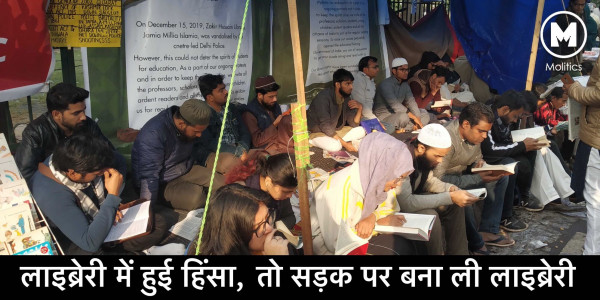
“उन्होंने हमारी लाइब्रेरी में घुसकर हिंसा की, हमने सड़क पर लाइब्रेरी बना ली। आप कभी भी जाकर देखिए सड़क पर आंदोलन के बीच स्टूडेंट्स पढ़ते हुए दिख जाएंगे। वो हमें मार-पीट सकते हैं पर हमारे हौसले को नहीं तोड़ सकते। पढ़ाई और लड़ाई साथ साथ चलेगी।” – जामिया मिलिया इस्लामिया विश्वविद्यालय के गेट नंबर सात के सामने चल रहे आंदोलन के दौरान जामिया के एक छात्र ने यह बात कही।
जामिया मिलिया इस्लामिया विश्वविद्यालय परिसर में बच्चों के ऊपर बर्बर पुलिस अत्याचार की घटना को एक महीने से अधिक समय हो गया है। लेकिन इस घटना में न कोई एफआईआर लिखी गई है न ही कोई कार्रवाई हुई है। विवि प्रशासन के वरिष्ठ अधिकारी ने बताया कि प्रशासन की तमाम कोशिशों के बावजूद पुलिस ने FIR नहीं लिखी है।
विश्वविद्यालय प्रशासनकीकोशिशेंनाकाफी
जामिया कोर्डिनेशन कमेटी की सफूरा ने कहा कि FIR दर्ज़ कराने के लिए जितनी कोशिशें विश्वविद्यालय प्रशासन की कोशिशें नाकाफी थीं। उन्होंने कहा कि विश्वविद्यालय के वाइस चांसलर ने 17 तारीख़ को पुलिस के खिलाफ FIR दर्ज़ कराने को लेकर स्टूडेंट्स को आश्वस्त किया।
बकौल सफूरा, वाइस चांसलर ने कहा कि पुलिस FIR दर्ज़ नहीं कर रही है। इस कारण से ई-मेल के ज़रिए भी शिकायत भेजी जाएगी और ऐसा न होने पर मजिस्ट्रेट के ज़रिए पुलिस के खिलाफ FIR दर्ज़ करवाई जाएगी। लेकिन 17 दिसंबर से 6 जनवरी तक इस संदर्भ भी कुछ भी ठोस नहीं हुआ।
विश्वविद्यालय प्रशासनखुदक्योंनहींआयाछात्रहितकेसमर्थनमें?
चलिए मान लेते हैं कि विवि प्रशासन की कोशिशों के बावजूद पुलिस ने जानबूझकर FIR नहीं लिखी। लेकिन फिर क्या विश्वविद्यालय प्रशासन की जिम्मेदारी नहीं बनती कि खुद आगे आकर स्टूडेंट्स से बातचीत करे और उन्हें स्थितियों से अवगत कराए। आखिर क्यों स्टूडेंट्स को सड़कों पर आकर आंदोलन करना पड़ता है?
JCC के एक अन्य सदस्य श्रेयस कहते हैं कि 14 दिसंबर को हमला केवल छात्र-छात्राओं पर नहीं हुआ था बल्कि ये हमला पूरे विश्वविद्यालय पर हुआ। इसलिए होना ये चाहिए था कि प्रशासन खुद इस हमले के खिलाफ खड़ा होता।
परीक्षाओं कोक्योंखींचागयालंबा?
पुलिस की बर्बर कार्रवाई और जामिया कैम्पस में हिंसा के कारण यूनीवर्सिटी को 6 दिसंबर तक के लिए बंद कर दिया गया। नतीज़तन, छात्र-छात्राएँ परीक्षा नहीं दे पाए। 6 दिसंबर को जब विश्वविद्यालय खुला तो परीक्षा जल्द कराने की मांग की गई। विश्वविद्यालय प्रशासन ने परीक्षाओं को पुनर्निर्धारित किया।
JCC के एक सदस्य ने बताया कि जो परीक्षाएँ दस दिनों के अंदर खत्म हो सकतीं थीं, उन्हें जान-बूझकर लंबा खींचा गया है। प्रशासन की ओर से परीक्षाओं को लंबा खींचने की वजह बताई गई विवि परिसर में हिंसा के बाद पैदा हुई असामान्य स्थिति।
विवि प्रशासनऔरवाइसचांसलरक्योंनहींकरतेसंवाद?
लेकिन स्टूडेंट्स का कहना है कि इन असामान्य स्थितियों से निबटने के लिए बेहतर ये होता कि विवि प्रशासन से जुडे़ लोग स्टूडेंट्स तक पहुँचने की कोशिश करते। संवाद के माध्यमों को खुला रखते और चिंताओं को सुनकर उन्हें दूर करने की कोशिश करते।
कुलपति की भूमिका के बारे में बोलते हुए सफूरा ने सवाल उठाया कि क्या इन स्थितियों में उन्हे छात्र-छात्राओं से सीधे संवाद स्थापित नहीं करना चाहिए? क्यों कुलपति की जगह अन्य प्रशासक उनके प्रवक्ता की तरह व्यवहार कर रहे हैं?
विश्वविद्यालयकेफैसलोंमेंशामिलहोंगेस्टूडेंट्स!
खैर इन स्थितियों के बाद जामिया कोर्डिनेशन कमेटी विश्वविद्यालय के फैसलों में स्टूडेंट्स की सहभागिता की बात करती हैं। उन्हें लगता है कि स्टूडेंट्स का पक्ष जाने बिना उनके बारे में फैसला नहीं लिया जाना चाहिए। और उनके वाज़िब सवालों को एड्रेस किया जाना चाहिए।
विश्वविद्यलय में हुई हिंसाओं के विरोध में बोलते हुए जामिया के एक छात्र सिराज ने बताया कि हिंसा और नफ़रत की आग सभी को जलाएगी। आज नहीं तो कल सभी की बारी आएगी। ये वक्त है करो या मरो का। संवैधानिक अधिकारों की रक्षा करना हम सभी का दायित्व है।
The recent annual financial stability report released by the RBI on the 27th of December 2019 shows that there’s a structural slowdown in India.
The report says that the situation is disturbing. The IMF has guided India to take immediate action to revive the economy. Dr. Arvind Subramaniam( Cheif Economic Adviser) and Mr. Josh Felman observed that the economy seems headed for an intensive care unit.
How bad is the situation
In 1991-92, the Indian economy was facing its worst time ever. The industry growth was -9% and the GDP was growing at just 1.1%. Comparing the current situation, the industry growth is -10% and the GDP growth is 4.5%. But, looking at the past data, this growth rate is also under question. There’s a question mark on GDP figures. It can never be 4.5% as the conditions are similar to 1991-92.
The 2017-18 reports show that the consumer goods production growth rate was 5% and at present it’s -1%. India’s exports were 9% in 2017-18 and today they are standing at -1%.
The government may say that exports are decided by global factors. If the global market is down, global sentiment is not very conducive, it will affect our exports. But domestic factors are equally responsible. It would be naive to say that only global factors are responsible for a decline in exports.
Ease of doing business, the robustness of bankruptcy and solvency code, availability of state of the art infrastructure, electricity, these factors also decide how much our country will export. So we can’t shift our blame entirely on global factors. If our exports are declining to the extent that it has gone negative, domestic factors are to be blamed.
In 2017-18, tax revenue was growing at a speed of 16% but if we adjust direct tax revenue for inflation in 2019-20, the growth in Direct tax revenue is 0%. It is alarming. It means the government’s capacity to spend will be squeezed
The best parameter to evaluate the economic condition of a country is electricity generation, because every sector consumes electricity.
Data tells that growth in electricity generation is lowest in the last 30 years. In 2019-20 the growth was just 1.8%. That means, demand for electricity will be limited, almost all sectors of the real economy will be underperforming and will get trapped in under capacity utilization. Electricity generation is directly linked to the growth of the overall economy.
As per the reports, the unemployment level today is the highest in the last 45 years. It has affected the purchasing power, demand making capacity in the market decreasing the sale in the market.
Reasons for slowdown
The main reason for this decline in the economy is the Second wave of twin balance sheet.
When the balance sheet of the private sector is under strain and the balance sheet of banks is also negative, this is called the twin balance sheet problem.
The first wave came into existence after demonetization in 2016. It was related to infrastructure companies and public sector banks. The second wave can be considered from 2019 when 2 more sectors were added to this list, real estate and NBFC crisis( PMC bank, IL and FS, Diwan housing).
Along with the breakdown of the financial system, the bursting of the real estate bubble intensified the effect. According to a report, in 8 major cities, the unsold houses for sale are 8 lakh crores. This amount is struck now. A huge amount of money is also spent on the maintenance of these houses by real estate companies.
The bank lendings to these real estate companies in 2018-19 were 22 lakh crores. A huge amount was lent to these companies by banks. It has come down to 1 lakh crore in the first 6 months of 2019-20. A huge decline of 21 lakh crore. This sector can’t survive like that.
IL and FS crisis became a trigger of this breakdown. The housing sector is the real sector that consumes skilled, unskilled and semi-skilled types of workforce. That is the main reason behind the high rate of unemployment that the nation is witnessing.
So many people have left India after taking money from the banks. This has increased the NPA.
The data further shows a disturbing image. It says that the companies pay 10.5% as interest rates on loans and the likely earnings are just 6.1% per annum.
That means companies are paying more in bank interest than their earnings, an annual shortfall of 4.4%. Companies can not survive with this huge amount of net loss.
The growing Iran-U.S. tension has increased a further risk of a disturbance in the middle east. India imports 84% of its crude requirements. The escalating conflict in the Middle East region could disrupt global oil supplies and lead to an increase in petrol and diesel prices locally. This could have cascading effects on a declining Indian economy as a rise in oil prices will affect all sections of society. A further increase in inflation can lead to a further decline in the economy.
Solutions
Dr. Arvind Subramaniam and Mr. Josh Felman’s report suggested some solutions that the government should follow to grow up the economy and eliminate the flaws in the procedures of conducting statistical surveys.
1. Fix India’s data problem
Headline inflation says under 4% but CAG says that its more than 6%. We have to fix this data problem because if data is not fixed, it will not only create confusion but it will also discourage and disappoint investor’s sentiments. The statistical system in Australia spends 8$ per person per annum, America spends 11$, and we in India spend only 8 rupees per person per year. Obviously the quality of data matters.
Our Indian statistical systems are underfunded and they are understaffed as well. There are allegations as well that there are political interventions with regards to the release of various surveys. The unemployment survey was withheld by the government in the name of the quality of data. There were issues regarding the revised GDP figures also.
2. Fix the financial system
There should be an independent assessment of bad loans because we have conflicting figures.
3. Fix agriculture-as 25% of people depend on agriculture directly and it decides rural sentiments and rural demand.
Govt. should create all India market for agriculture. E-NAM is established but it has not achieved its objective. Govt. should try to evolve a federal setup for fixing up the agriculture as it is a concurrent subject, both, states and union makes laws on issues related to agriculture and equal participation of states and union is confirmed.
4. Don’t cut personal income tax rates just for political benefits. Only the top 4-5% of people pay income tax. To boost consumption, the govt. should focus on the remaining 95%. By decreasing income tax rates, the govt. will benefit only 4-5% of people who will not increase their consumption.
5. Don’t increase the GST rate
Increasing GST will have cascading effects. It will increase the market price and thereby will subside demand.
6. Don’t blame GST
GST is the reflection of the entire economy. If the economy doesn’t perform well, the collection will below. GST revenue will go up when the economy will grow.
7. Increase supervision of NBFCs
8. Shrink public sector banks. Make banking space more competitive by opening more private banks.
9. Govt. should fund only those banks that reform themselves.
Last and most important, India should use its diplomatic strength to convince the whole world community to mediate between the war-like conditions between the U.S. and Iran because a disturbed middle east could bring drastic consequences to India.
There was a piece of disturbing news that came from JNU in Delhi. Masked men and women who were armed with sticks and stones, they beat students and teachers and vandalized property at the university. The mob also attacked a team of doctors and nurses that went to JNU to give first-aid to students and broke the windows of their ambulance. The attack has left 34 people injured.
The campus had been tense for a few months as one section of students had been protesting against the sharp increase in hostel fees by the university authorities.
Even if somebody disagrees with the ideology of JNU students or any other university, violence is not a solution. There should be no place for violence in a democratic and civilized society.
Who’s responsible for these attacks?
According to reports, a radical group has taken the responsibility for the violence that took place in JNU on the eve of 5th Jan. They could be behind this attack. But they are not the real culprits. The real ones are those who incited the violence. And we know them. Unfortunately, that’s the media.
When students were protesting at JNU, AMU, JMI, Jadavpur University, Hyderabad University, etc, a certain section of the television news channels during their Prime Time show at 9 PM every night, would call these students anti-nationals, part of Tukde-Tukde gang and what not. These statements made by television journalists leave a deep impact on people. They think that whatever the TV anchor is saying is correct and inturn takes drastic steps.
The Need of the Hour
The job of the media is to portray facts, present both sides of the picture and remain neutral. The media should not act as a jury and decide who is a nationalist and who’s an anti-national. These actions of media instigate people which lead them to the path of violence.
There are MEDIA ETHICS that every media person and organizations need to follow. But, unfortunately, most of the media persons and organizations neglect them because of which media is losing its integrity as the fourth pillar of democracy.
As the Delhi assembly elections are approaching nearer, politics has heated up in the national capital. The BJP, the Congress party, and the Aam Aadmi Party have all left behind the development issue and are busy doing politics over the Citizenship Amendment Act. This time just a month ahead of elections, the Delhi voters are talking nothing other than CAA, and this is what basically the political parties want, irrespective of their ideologies.
The common voter is thus falling into the trap of our political leaders. Besides, our politicians know how to play with the mind of youths, especially those studying in premier educational institutions.
When it comes to student politics, JNU’s name comes on the top. The University is often called an ‘adda’ (hub) of politics. A few days back there was an outrage among the students over the fee hike issue. Whether the fee-hike issue was justified or not is another debate. However, the panic created by those, who were really not worried about the hike but wanted to fulfill their own vested interests, gathered a lot of media coverage. The issue was indeed, blown out of proportion.
Similarly, in 2016, Jawaharlal Nehru University was in news over the ‘Tukde-Tukde controversy.’ On February 9, 2016, the university turned into a battleground, after a group of students organised an event to mark the death anniversaries of Parliament attack accused, Afzal Guru and the co-founder of Jammu Kashmir Liberation Front (JKLF), Maqbool Bhat. Surprisingly, the commemorative meeting went ahead even after the JNU administration revoked permission for the programme in the wake of complaints from Akhil Bharatiya Vidyarthi Parishad (ABVP).
After clashes erupted between the ABVP and the JNUSU, sedition charges were slapped on Anirban Bhattacharya, Umar Khalid and Kanhaiya Kumar, the organisers of the event. Khalid and Bhattacharya were among the five students who, along with JNU Students’ Union (JNUSU) president Kanhaiya Kumar, had allegedly shouted anti-national slogans at the event.
The February 9, incident was a widely debated issue in that year, there were demands to shut down JNU. What aggravated the situation further were the visits of our political leaders like Rahul Gandhi, former Union ministers Anand Sharma and Ajay Maken, former Rajya Sabha member D. Raja and Swaraj Abhiyan chief Yogendra Yadav, to the JNU campus.
No doubt, these political leaders visited the campus for their selfish interests and none of them cared about the future of students studying in JNU. As political representatives, our duty is to guide the students to follow a right path, however, seeking political mileage by turning educational institutions into political battlefields is nothing but dirty politics.
This time, when protests around CAA have already created a tensed environment in the national capital, what happened in JNU, yesterday, is highly condemnable. On Sunday night, a mob of around 50 to 60 masked men and women, holding sticks and rods entered hostel buildings, and allegedly assaulted students and vandalized the campus.
As the blame game between the ABVP and the left-wing over the violence continues, the question remains as to if our educational institutions safe, do they ensure the safety of students to their parents who send their children so as to get quality education in these prestigious institutions? The recent incident raises a big question mark on the security arrangements. Why couldn’t the security guards identify these masked assailants when they entered the University campus?
That too, when it’s an established fact that JNU is a hub of political activities and situation in Delhi was already boiling following the ongoing anti-CAA protests. Political gimmick around the whole JNU episode cannot be ruled out. Whether those who attacked the students and teachers belonged to ABVP gang or the JNUSU gang is not important, what is crucial is that our leaders should not politicise the issue as they are doing now. A time bound probe should be ordered into this whole incident and those found guilty should be punished.
Educational institutions are basically meant to seek knowledge and they should not be turned into violence sites. Student politics is good, but only as long as, it is within its limits.
Besides, Neither the ABVP gang should dominate campus life in India in the name of nationalism, nor should those affiliated with the left-wing group try to make any attempt to portray a terrorist as a hero. By commemorating Afzal Guru in JNU, the students belonging to the left-wing group did an insult to the family member of those who laid down their lives in the 2001 Indian parliament attack.
It is least expected from those studying in one of India’s most prestigious institutions, to differentiate between a martyr and a terrorist. After all, a terrorist is a terrorist and a martyr is a martyr. In the same year, reacting to the JNU controversy, ace wrestler Yogeshwar Dutt had written a patriotic poem in Hindi. A translation of few lines, from the poem goes like this:
“They consider themselves as enemies of the country in which they are born.
What sort of freedom of speech is this that permits one to abuse Mother India.
What sort of freedom of expression allows one to violate the honor of my country?
The union government has approved Rs 3941 Cr for conducting NPR along with a separate Rs 8754 Cr for census 2021. NPR is not a new exercise, it has also taken place in 2010 and 2015, but there’s a fear this time.
NPR is a register of population, a register of people living at a specific place for a period of a minimum 6 months. It doesn’t matter if the person is a citizen or not. But the NRC is a register of citizens only.
People are confused if this data is going to be used for the nationwide NRC about which many ministers of the union government have said previously on various occasions. HM Amit Shah has said that the govt. is going to conduct a nationwide NRC before 2024.
But after the nation witnessed protest against CAA-NRC in many cities, the govt kind of backstepped a little and started saying that there is no discussion on NRC till now from the time they attained power in the union.
But this has created fear among the people. The website of the census of India still shows that the NPR could be used for nationwide NRC.Due to this fear, the chances of error increases because then people will give wrong information.
Privacy Is Also An Issue
It is not clear which documents are going to be used in NPR. The govt didn’t successfully take people in confidence about the data privacy bill. If the Aadhar data is going to be linked with the NPR then it would be a breach of right as the supreme court has also upheld the right to privacy as a fundamental right. This data could be misused by some anonymous user against the person. Or it could also be used for commercial purposes by companies. Govt should come with proper facts that this is not going to be misused.
There’s A Space For Error Also
The government said that the exercise is going to be conducted by a mobile application and will reduce the burden of physically maintaining the data. That’s a step in a good direction, but it also raises some concerns The possibility of rechecking the data will decrease.The government said that people can go online and check their status but the government didn’t realize the lack of computer literacy that’s prevailing in our country. Considering the previous data, their’s a difference of 2.3% between the no. of people in NPR and census of 2011.
The decreased possibility of rechecking the data digitally could lead this no. to further grow more as there is a great possibility that a digit could be misplaced or entered wrongly while entering a 12 digit Aadhar no.This could be disastrous.
Experiences From The Past
During the 2015 NPR, officials ask if their household has a toilet, many people said that they don’t have a toilet in the hope that they will receive Rs 14000 for building a toilet. In the 1981 census data, people didn’t tell their true no. of children because there was a fear that this would be going to relate with the population control measures taken by Sanjay Gandhi during the emergency. There’s the same fear present this time that this data is also going to be used for NRC in the future. It increases the chances of wrong data being collected and then there would be no use of conducting this huge exercise.
What Government Should Do It’s important to update the census data to know the demographic dividend of the country as it helps the government to form policies for the welfare of people keeping in mind that more than 40% population still survives below the poverty line. But there’s a sense of fear among the public. The government should come unanimously on the NPR and take the nation in confidence that this data will not be used for NRC.
Insecurity increases when some small leaders come and say that the time has come to identify some specific people and remove them from this country. This fear should be finished.
Not a single day passes when the Modi-Shah govt fails to dominate the news headlines. The Modi govt after it has assumed office has delivered several ‘historic’ judgements like: Triple talaq, abrogation of Article 370, Ayodhya judgement and the recent Citizenship Amendment Act. One phrase goes true, that is, you can either applaud or criticise the Modi govt but you cannot ignore it.
However, even after these key decisions, it seems the Bharatiya Janata Party, has miserably failed to turn the situation in its favour, as the reverse has happened with the Modi Govt, something it had never thought of. The oppositions parties can although rejoice over this, as they were sceptical that the decisions would help BJP increase its popularity and support base.
The elections to the three state assembly elections- Haryana, Maharashtra and Jharkhand prove that the ruling party failed to understand the mood of the voters and the judgements it delivered did no good to the saffron party.
In Haryana, the seat tally came down from 47 seats in 2014 assembly polls to 40 seats in 2019 state assembly elections. A loss of 7 seats, at a time when there were speculations that abrogation of article 370 will immensely help BJP increase its number of seats in the elections held last year. Similarly, riding the Modi wave and the Nationalism agenda, the number of seats for BJP fell from 122 seats in 2014 Maharashtra assembly elections to 105 seats in the state assembly elections held last year. And what came as a blow to the top bastion of BJP, was the Jharkhand assembly election results 2019. The charisma of PM Modi could not work in Jharkhand, and the party performed miserably in the last year assembly polls.
In 2019 Jharkhand assembly elections, the BJP was limited to only 25 seats, as compared to 37seats it secured in the previous assembly elections. The party tried in vain to make up for local dissatisfaction by bringing in national issues and a polarising push. The latest, Jharkhand poll debacle may prompt BJP to have a second look at the policy to work on its strategies to hold the lead. BJP now rules states accounting for under 40% of India’s territory, down from 70% three years ago.
Perceptions about Modi-Shah duo’s capability to create successful political campaigns has taken a serious hit ahead of crucial elections in Delhi, West Bengal, Bihar and Tamil Nadu.
CAA and its impact on Delhi assembly elections
India is set to hold assembly elections in its capital Delhi, providing a key test for whether the BJP can arrest a trend of losing states to regional and opposition alliances. Voting to the 70-member assembly will take place on February 8. As the Delhi assembly elections are approaching nearer, the BJP is busy making its own cost-benefit reports.
After the protests over CAA have rocked the entire country, particularly the national capital, BJP would definitely shy away from taking any immediate risks. The party has realised that unlike Ayodhya, where early preparations and reach out to people helped immensely in maintaining peace, no such measures during CAA has resulted in escalation of protests across the country.
Several BJP leaders have already started with door to door campaigns by distributing pamphlets containing facts about CAA. Earlier this year, Home minister Amit Shah kickstarted his pro-CAA campaign from the Jodhpur district of Rajasthan.
Past Delhi assembly elections show that in Delhi, polls are fought on local issues. Political parties are well aware of the fact that it is not easy to influence Delhi voters, considering their political awareness and understanding. Given this, either CAA, NPR or Article 370 are less likely to influence voters in the national capital. To BJP’s disadvantage, rising unemployment, GDP growth and the economic slowdown, are certain issues which the Delhi residents will keep in mind while casting their vote. On the other hand, AAP is seen as a formidable force against the BJP in Delhi. The AAP government has done remarkable work in education, healthcare and reduced the water and electricity bills.
Impact of CAA on West Bengal politics
The controversial Citizenship (Amendment) Bill is all set to determine the course of West Bengal politics in the days to come. The BJP has maintained that the CAB will benefit more than 1.5 crore people across the country, including over 72 lakh in the West Bengal. West Bengal is bracing for deeper polarisation between TMC and the BJP on communal lines ahead of the 2021 Assembly polls.
Chief Minister Mamata Banerjee, who has been a strong opponent of the CAA, since day one, is trying to shed her image of being only pro-minorities. The ruling TMC in West Bengal has certainly been on the back foot since BJP won 18 of the 42 Lok Sabha seats in May 2019 — four seats short of the ruling party. Much of the votes for BJP were against TMC’s perceived shoddy governance and Banerjee’s quite unsophisticated display of ‘minority appeasement.’
Hindu refugees comprise between 10 and 15 per cent of the electorate and are a deciding factor in nearly 80 assembly seats in the state. Apart from that, Muslims account for 27% of the total population in West Bengal. Only time will tell whether the ‘contentious’ Citizenship Amendment Bill, will deepen consolidation of Hindu and Muslim votes in favour of the saffron party further or it would “backfire” like the NRC as both of them are attack on “Bengalis and Bengali pride”.
Faiz’s most famous poem “Hum Dekhenge” got both the writer and the singer in trouble. The year was 1985. A packed auditorium in Lahore, with more than 50,000 in attendance. It was the first death anniversary of Faiz Ahmed Faiz. A woman dressed in a black saree takes the stage and starts singing the poem.
This was followed by an immediate commotion in the crowd. The poem incited the passion of rebellion in the audience. This woman was none other than Iqbal Bano, one of the most beloved singers of Pakistan. “Hum Dekhenge”, was written by renowned Pakistani poet, Faiz Ahmed Faiz. As per reports, Iqbal Bano was later banned from singing anywhere in Pakistan. The immortal lines of ‘Hum Dekhenge’ were written in 1979 after the religiously conservative and repressive Zia rose to power through a coup in 1977. Since poetry is considered to be the best language of dissent, through this poem, the poet tried to criticise the dictatorship of former Pakistani general-turned president Zia-ul-Haq.
Late Pakistani author, Faiz Ahmed Faiz’s popular poem “Hum Dekhenge” has snowballed into a fresh controversy, this time in India, after some students of the Indian Institute of Technology (IIT) Kanpur recited it in protest against the government’s alleged atrocity on students of Jamia Millia Islamia in Delhi. This happened when Jamia Milia students were protesting against the Citizenship Amendment Act.
The Indian Institute of Technology, Kanpur, has reportedly taken offence at Faiz Ahmad Faiz’s famous poem “Hum Dekhenge” recited by students against the Citizenship Amendment Act, on campus in December. Nevertheless, at Jamia Millia Islamia in New Delhi, too, a professor complained “that protesting students had made communal remarks at the event”.
The verse that gave offence was: Ab arz-e-Khuda ke Ka’abe se, sab but uthwaae jaayenge / Hum ahl-e-safa mardood-e-haram, masnad pe bithaaye jaayenge / Sab taaj uchhale jaayenge, sab takht giraaye jaayenge/ Bas naam rahega Allah ka, hum dekhenge (From the abode of God, when the idols of falsehood will be removed/ When we, the faithful, who have been barred from sacred places, will be seated on a high pedestal/ When crowns will be tossed, when thrones will be brought down, only Allah’s name will remain) .
Top poets and writers including Javed Akhtar, Rahat Indori and Vishal Bhardwaj have described attempts to paint Faiz Ahmad Faiz’s “Hum Dekhenge”, as anti-Hindu and pro-islam, as ridiculous and baseless attempts.
However, these writers and poets which also include those demonstrating protests against CAA across India, do not represent every Indian citizen. There are people, and certainly larger number of people who think, that their sentiments have been hurt through this poem. Given the selective media coverage, a clear picture of the whole story fails to reach the common man living in India. This can be said, because going back, one realises that whether its CAA, NPR, Abrogation of article 370 or Ayodhya issue, all these found a place in Bharatiya Janata Party’s poll manifesto.
It was on the basis of these poll promises that Indian citizens voted BJP to power and not any other party. Since BJP won 303 Lok Sabha seats in 2019 general election, a clear majority, which was also an indication that majority of Indian citizens agreed with the BJP’s policies and ideas. Army rule doesn’t exist in India, as is the case with Pakistan.
Given the fact that Faiz Ahmad Faiz’s “Hum Dekhenge” was an attempt to criticise the govt of that time, which was dominated by the Pakistani millitary. In India we have a democratically elected govt, hence reciting the same poem in Indian context which is entirely different, is all together an absurd idea and does not go by any logic.
Secondly, Faiz did not show any activism in support of minority Hindus of Pakistan. There exist no instances where this poet wrote anything revolutionary highlighting the plight of Hindu communities living in Pakistan. It is inappropriate for a writer/poet, to raise voice on one issue and neglect the other, when both of them are related with freedom and Human rights.
Thirdly, enough incidents have come into light which reveal that few among those who are protesting against CAA and reciting “Hum Dekhenge”, are neither aware of the Act nor do they know the meaning of this poem. These people are mostly those, who like easy things and as such it suits their convenience if they follow a herd.
It was Zulfiqar Ali Bhutto govt, that declared Ahmadis non-Muslims via a constitutional amendment in 1974. Faiz Ahmed Faiz was an aide of Bhutto. Faiz worked in various ministries in Bhutto government, in advisory and senior roles. He did not resign to protest what Bhutto did to Ahmediyas. A revolutionary poet should have done at least that. Similarly, his activism remained totally absent when Pakistan Army was involved in the genocide in East Pakistan (now Bangladesh). Unfortunately, Faiz’s revolutionary poetic style appears limited to opposing Zia-ul-Haq only, and a trigger for that might be a selfish reason because Zia had ousted Bhutto from power.
Lastly, “hum dekhenge” can be considered to be provocative since the poem includes metaphors where Islam prevailing over idolatry is being equated with an act of revolution. It is therefore necessary for those advocating for the recital of this poem to realise that one’s ‘Right to freedom of speech and expression’ should not compromise with the religious sentiments of another community. As responsible citizens we should be capable enough to distinguish between speech that only criticises an order and speech with malicious intent that incites people into disturbing public order.
The recent enactment of the amendments to the Citizenship Act of 1955 has left many very disturbed. The legislation itself is undoubtedly problematic and is when compounded by the linkages with the National Register of Citizens (NRC), creates a sense of fear in a particular community.
The CAA is touted as a “fast-track” means of granting citizenship by naturalization to what it identifies as persecuted minorities (Hindus, Sikhs, Buddhists, Jains, Parsis, and Christians) from three neighboring countries (Afghanistan, Bangladesh, and Pakistan). Those belonging to these communities from these countries will not, as per the law, be regarded as “illegal immigrants”.
It is arbitrary and violates the right to equality before law enshrined in Article 14 of the Indian Constitution. It deliberately marginalizes Muslims as a minority community and uses religious identity as the basis for granting citizenship
The protests that have followed the Citizenship (Amendment) Act (CAA), 2019, were not surprising, but how the protesters were treated certainly is. The nation is continuously witnessing hundreds of protests in many cities. Most of them are peaceful like in Shaheen Bagh, Jantar Mantar, Jama Masjid, Police Headquarters Delhi, and in many cities of India.
These protests mainly started from the universities like Jamia Milia Islamia and Aligarh Muslim university but the way how the police tried to suppress the protests by brutally hurting the students in their campuses, by opening fire on them in university, sparked the anger among the whole student community across the nation. The students of various universities like JNU, DU, PU, BHU, IITs, IIMs, and many Indian students studying in different parts of the world also stood in solidarity with these students and protested in their capacity.
Many of them refused to receive their gold medals, their degree during the convocation ceremony in the presence of the dignitaries.
Police Actions Under Question
The reaction of the law and order machinery to what were essentially student-led peaceful protests has led to incidents of violence and loss of property across the country, which is unfortunate. The way in which UP police was seen misbehaving and abusing members of a specific community is condemnable and raised serious questions on the working of police.
Were they having the support of their political masters when they were targeting the peoples of Muslim community? The way in which the Firozabad administration sends notice to the person who died 6 years ago for causing violence during Anti-CAA protests, raises doubts. Does the police arrest the suspects by identifying them by their clothes?
Expectations From The Judiciary
The Judiciary should immediately step in and start hearing the petitions filed by many social activists to evaluate and infer upon the situation. In the wake of the CAA protests, the Chief Justice of India reportedly said that if people/protesters wanted to “take to the streets”, then they need not approach the courts.
Some could read this statement as a sort of warning that good behavior was a prerequisite for obtaining justice. In any event, in a democracy, protest and recourse to the judiciary are options that are legitimately available to the people. Dissent or protest is the lifeline of a democracy. But, what is the judiciary supposed to do when society as a whole is protesting? In such a scenario, there is no clear line that can be drawn between declaring protesters as good or bad. This is a watershed moment for this generation of judges.



 Molitics